

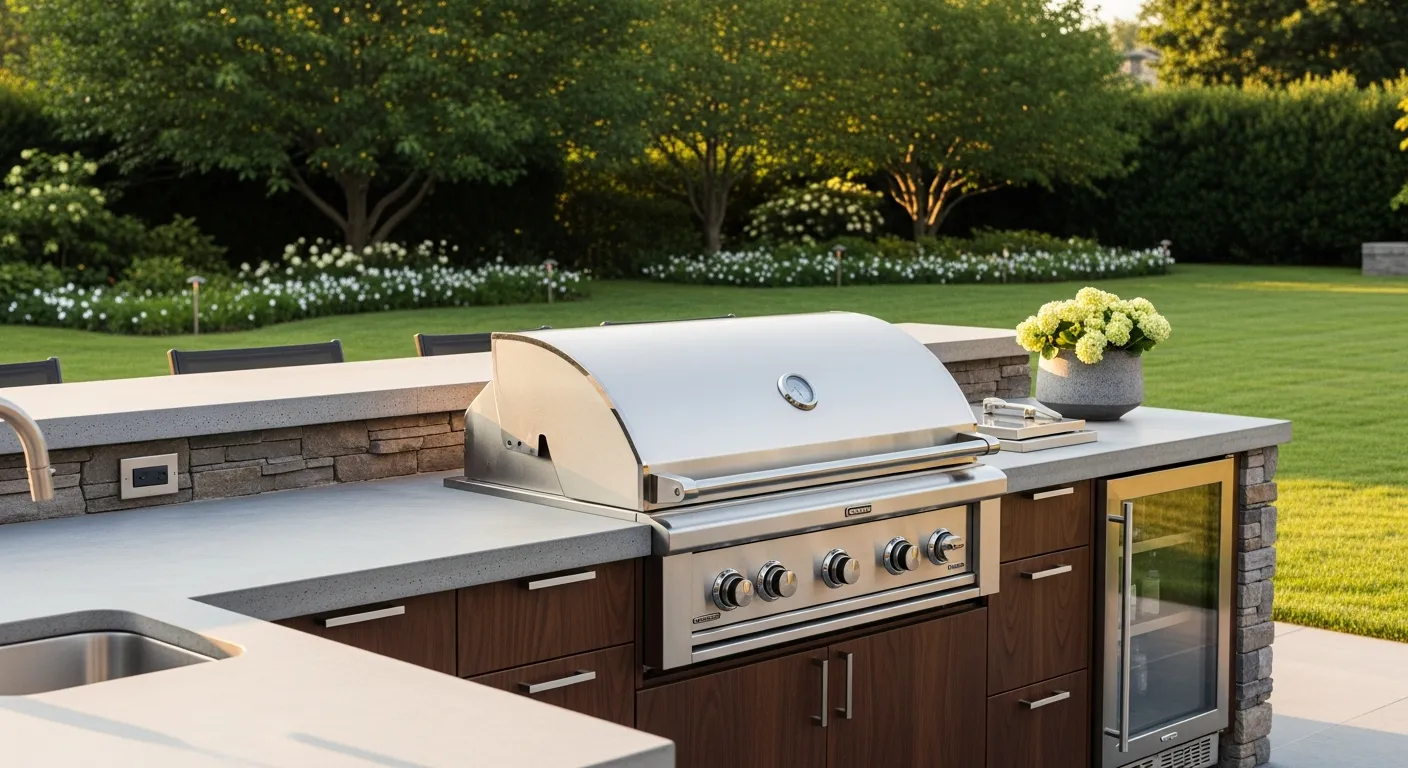
Introduction: The Overlooked Essential of Home Maintenance
In the world of high-end home maintenance, we meticulously schedule window washing, carpet steaming, and HVAC duct cleaning. Yet, the hardest-working appliance in the modern backyard—the grill—is often left with the most basic level of care. While the outdoor kitchen is a focal point of the home, without a rigorous cleaning regimen, it quickly becomes a liability rather than an asset.
A truly clean grill is not just about a quick scrub before a cookout; it is about a systematic restoration of the appliance’s internal and external components. Understanding the difference between a "surface clean" and a fully "sanitized" unit is essential for any homeowner who values food safety, appliance performance, and the aesthetic integrity of their outdoor living space.
1. The Danger of Carbonized Grease and Creosote
Most homeowners rely on a standard wire brush to clean their grates. While this may remove some surface debris, it does nothing for the "firebox" below. Over months of use, layers of grease, salt, and marinades liquefy and drip onto the burners and heat deflectors, where they undergo a chemical change called carbonization.
This buildup creates several critical issues:
- The "Dirty Smoke" Effect: When old, carbonized grease is reheated, it releases acrid smoke and creosote. This doesn't just "flavor" your food; it coats it in bitter, carcinogenic soot that ruins the profile of high-quality ingredients.
- Corrosive "Pitting": Despite being made of 304-grade stainless steel, high-end grills are not invincible. The acidic nature of old food residue, combined with moisture, causes "pitting"—small holes in the metal that eventually lead to total structural failure.
- Fire Hazards: Accumulated grease is the leading cause of "grease fires" and uncontrollable flare-ups that can damage the grill's internal wiring and sear-burners.
2. Hygiene and the "Invisible" Bacterial Risk
A grill is a cooking surface, yet it is often the least hygienic area of a home. During the humid months between use, a neglected grill becomes a breeding ground for bacteria and a magnet for pests. Standard "burn-offs" (turning the grill on high for ten minutes) are rarely hot enough for long enough to fully sanitize the deep corners of the firebox or the undersides of the grates.
A thorough, professional-level sanitation process involves stripping the unit down to the bare metal. This removes the "biological film" that accumulates on the interior walls. When a grill has been properly maintained, it should look and smell like a new appliance, free from the stagnant odors of past meals.
3. The Technical Restoration Process
What defines a high-level maintenance routine? It is a process of disassembly and detailing that standard DIY methods cannot replicate.
- Component Decarbonizing: The grates, flavorizer bars, and heat plates are removed and soaked in specialized, food-safe decarbonizing tanks. This strips away "baked-on" layers that a brush cannot touch.
- Burner Port Clearing: Over time, spider webs or carbon deposits clog the tiny holes in the burner tubes. This causes uneven gas flow. Part of a deep clean involves manually clearing these ports to ensure a perfect, blue flame and consistent heat distribution.
- The Vacuum Phase: Using high-powered vacuums to remove every ounce of loose carbon and ash from the bottom of the firebox, preventing it from blowing onto your food during the next cookout.
4. Protecting the Real Estate Value of the Outdoor Kitchen
In the luxury real estate market, an outdoor kitchen is a major selling point. However, a buyer’s first instinct upon seeing an outdoor grill is to lift the hood. If they see a blackened, greasy interior, the perceived value of the entire outdoor setup drops instantly.
A grill that has undergone professional grill cleaning signals a meticulously cared-for home. It preserves the "showroom" luster of the stainless steel and ensures the igniters and valves work with factory-level precision. This level of detail-oriented cleaning is what keeps a high-end property "listing ready" at all times.
5. Seasonal Deep-Cleaning Cycles
To maintain a safe and efficient kitchen, a deep clean should be performed at least twice a year.
- The Pre-Season Restoration: This removes any mold, pests, or debris that accumulated during the winter or off-season.
- The Post-Season Preservation: This strips away the salt and fats from the summer before they have a chance to sit and corrode the metal during the damp, cold months.
Conclusion: Maintenance is the Ultimate Luxury
A beautiful home is the result of thousands of small, correct maintenance decisions. Just as we wouldn't cook in a kitchen with greasy floors and soot-covered counters, we should not accept a neglected grill as the centerpiece of our outdoor space. By shifting the focus from "quick scrubbing" to "deep cleaning," we protect our health, our property value, and the quality of every meal we serve.


