Your couch has been in a storage unit since May. It is now September, and you open the door to a smell like a wet basement. Nothing leaked. The air alone did it.
So, do you need climate controlled storage in a humid climate? Usually yes for wood furniture, mattresses, upholstery, leather, electronics, photos, and papers, especially if they will sit for more than a month or two. For sturdy items like metal shelving, plastic bins of tools, or patio gear, a standard unit often works fine. The right answer depends on what you store, how long it stays, and how well you prepare it.
What "Climate Controlled" Actually Means
Climate-controlled storage is an indoor unit where the facility manages temperature, and in the better cases humidity, so conditions stay fairly steady all year. The word "humidity" matters here. Some units only cool or heat the air, and cooling alone does not guarantee dry air.
That is why it pays to separate three terms people use as if they were the same:
-
Temperature-controlled: The unit is kept within a comfortable temperature range.
-
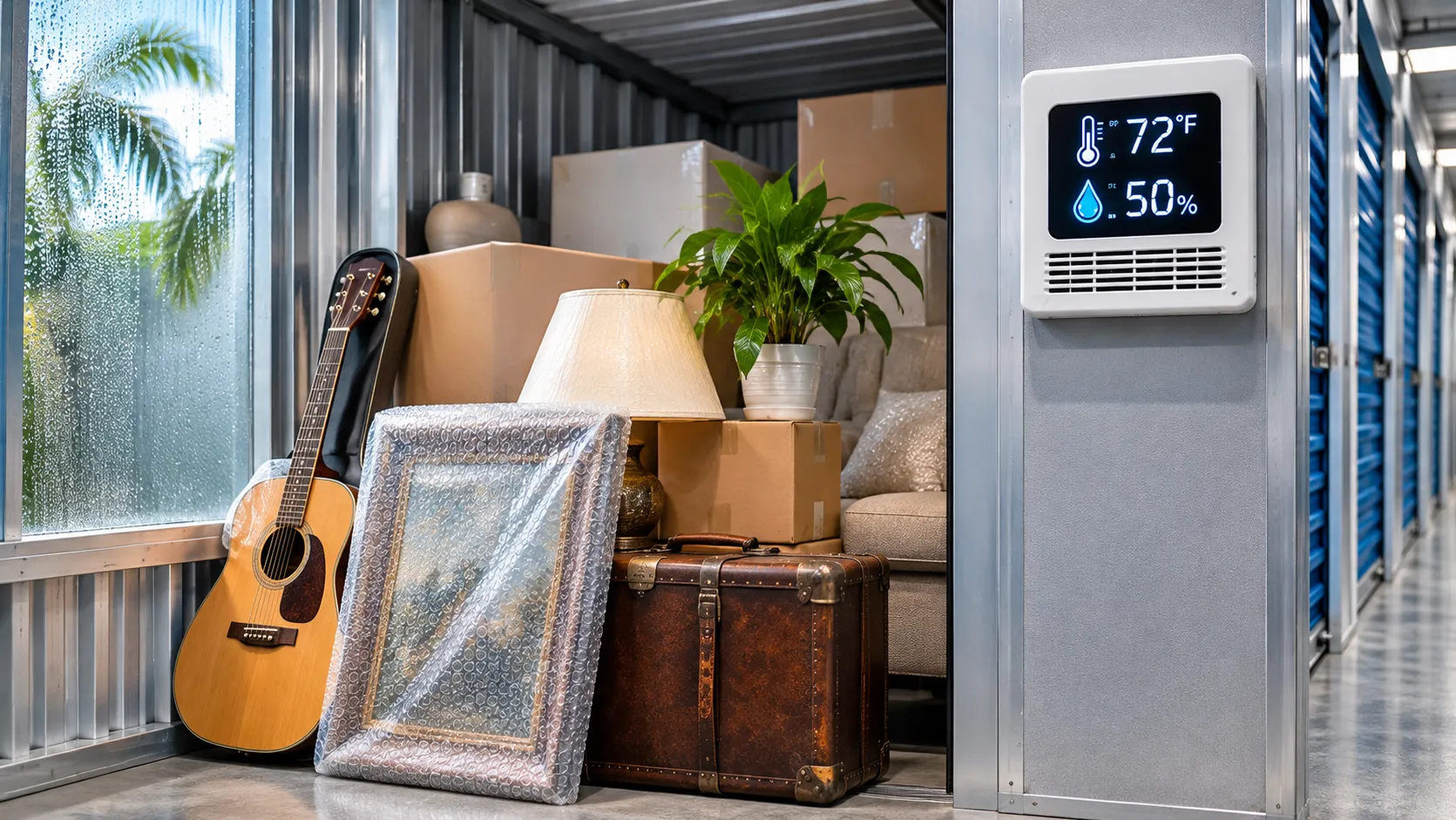
Humidity controlled storage: The facility actively removes moisture, often with dehumidifiers, and aims for a target range.
-
Standard storage: A drive-up or interior unit with no heating, cooling, or moisture management.
If you live somewhere muggy, humidity control is the feature that does most of the work. Temperature is the supporting actor.
Climate Controlled Storage vs Regular: What Changes in Humid Weather
In dry regions, a regular unit mostly has to survive heat. In humid regions, the problem is moisture that never leaves. Metal doors and roofs warm up in the sun, the sealed space traps damp air, and nothing pulls the water back out.
Here is how the two options usually compare for a coastal or Southern climate:
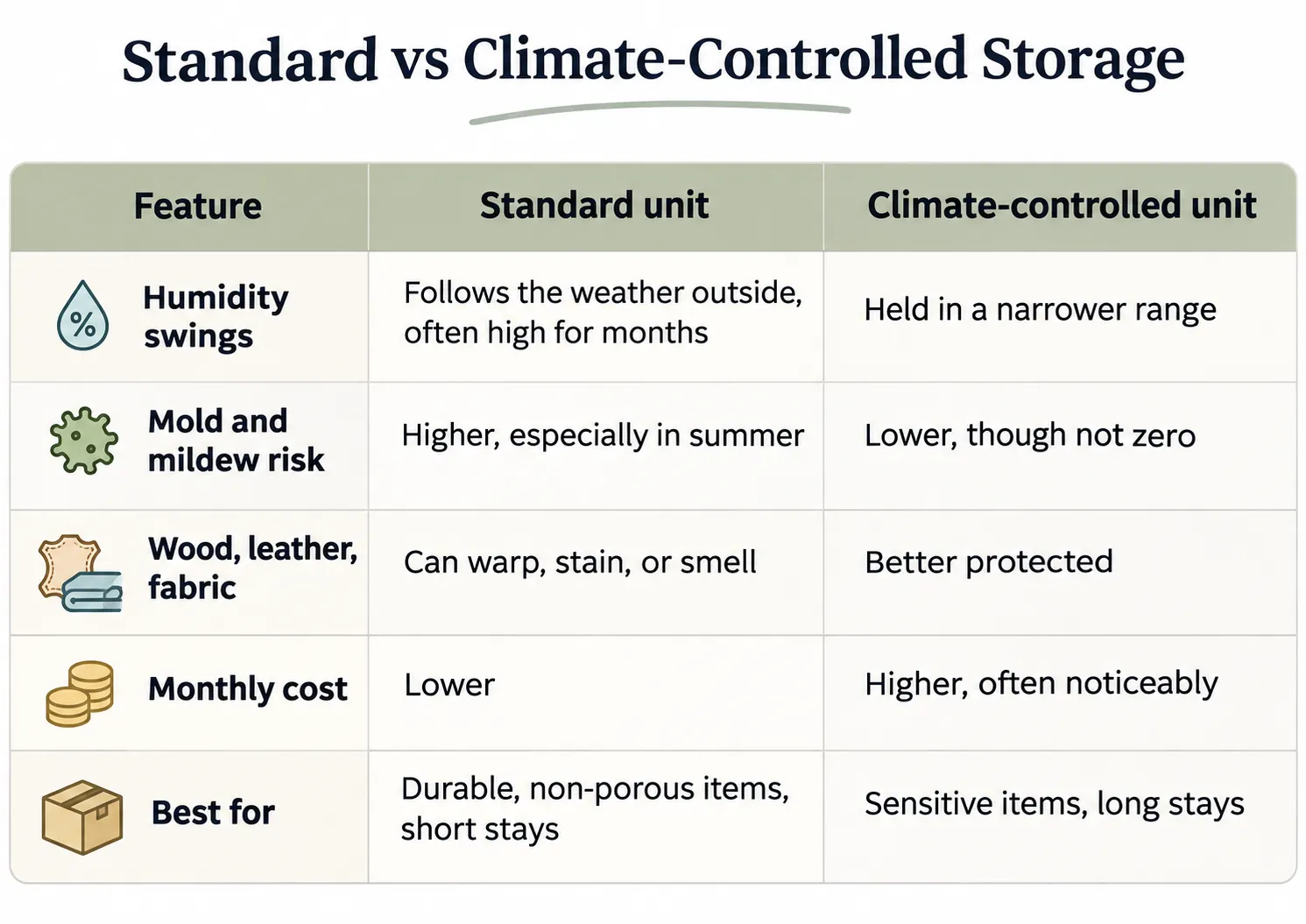
Climate control reduces the odds of damage. It does not make mold impossible. A damp mattress put into any unit will still bring its moisture along, which is why preparation matters in both cases.
Why Humidity Is the Real Problem
Mold needs two things: moisture and something organic to eat. Wood, cotton, paper, and leather all qualify. The National Park Service explains in its guidance on mold in museum collections that spores sit dormant until they get enough moisture, and that keeping humidity under control is the best way to stop them from growing. The same guidance says spore growth is less likely when relative humidity stays between 45% and 55%, and that it should always stay below 65%. Relative humidity, or RH, is simply how much water the air holds compared with the most it could hold at that temperature.
The U.S. Environmental Protection Agency gives a similar range for homes. Its mold guidance says to keep indoor humidity between 30% and 60%, and to dry wet items within 24 to 48 hours. Those numbers explain why a closed metal box in a muggy summer is risky. Outdoor air in many Southern and coastal cities sits above those limits for long stretches, and a standard unit has no way to bring the number down.
Mold is not the only concern. The NPS notes that mold can stain wood, textiles, and paper, and that leather is especially prone to damage. Moisture also swells and shrinks wood over time, rusts metal, and fogs electronics.
Storing Furniture in Humid Weather: What to Expect
Furniture is where most people feel the difference. Solid wood absorbs and releases moisture with the seasons, which is why drawers stick in July. Inside a hot, damp unit that movement gets stronger. Joints loosen, veneers lift, and finishes can turn cloudy.
Upholstery and mattresses are even more exposed. Foam and fabric soak up water from the air, and the inside of a cushion dries slowly. By the time you smell the problem, the mold is already deep in the padding.
A few practical points:
- Wood furniture with veneer, inlay, or antique finishes is the least forgiving.
- Mattresses and sofas are the most likely to develop odors.
- Metal-framed and plastic furniture usually handles standard storage well.
- Leather needs steady, moderate conditions, since both damp and heat harm it.
Which Items Justify Paying More
Not everything needs the premium option. A simple sort keeps your costs sensible.
Strong candidates for climate control:
- Wood furniture, especially pieces with sentimental or resale value
- Mattresses, sofas, rugs, and upholstered chairs
- Leather goods, clothing, and linens
- Electronics, instruments, and appliances with circuit boards
- Photos, books, artwork, and important papers
Usually fine in a standard unit:
- Metal shelving, tools, and garage equipment
- Plastic bins with sealed lids holding non-organic items
- Outdoor furniture and grills, once fully dry
- Holiday decorations that are cheap to replace
If an item would be painful to lose or expensive to replace, put it in the first group.

Do You Need Climate Controlled Storage in a Humid Climate? Three Questions
Is climate controlled storage worth it for you? Run through three questions.
1. How sensitive is what you are storing?
If most of the load is wood, fabric, paper, or electronics, the answer leans yes. If it is mostly tools and plastic, it leans no.
2. How long will it stay?
A two-week gap between homes carries little risk, even in summer. Six months or more through a humid season is a different story, because mold needs time to take hold and time is exactly what long storage provides.
3. What is the cost of being wrong?
Compare the extra monthly fee to the replacement cost of what you are protecting. A few extra dollars a month is easy to justify against a ruined dining set or a mattress you have to throw out.
Here is a quick worked example. Suppose you store a bedroom set, a sofa, and a few boxes of books for five months over the summer. Most of those items are organic and absorb moisture, and the stay covers peak humidity. That is a clear case for climate control. Now suppose you store a bike, a toolbox, and plastic yard equipment for three weeks. A standard unit is a reasonable choice.
Mixed loads are common. Some people split them, putting only the sensitive items in a climate-controlled unit and the rest somewhere cheaper.
Questions to Ask Before You Rent
Not every unit sold as "climate controlled" manages humidity the same way, so ask before you sign. If you are comparing storage units in Savannah, GA or anywhere else with a muggy summer, these questions apply to any facility:
- Does the unit control humidity, or only temperature?
- What humidity range does the facility aim for, and how is it measured?
- Is the unit inside a building, or is it a drive-up unit with a cooling system added?
- How does the facility handle a power outage or equipment failure?
- Is the unit clean, free of pests, and free of any damp smell when you tour it?
Visit in person if you can. Your nose is a decent tester. A musty smell or visible water stains on the floor or walls are warning signs, whatever the sign out front says.
How to Protect Your Things in Any Unit
Good preparation lowers the risk in both kinds of storage. The NPS guidance recommends keeping items off the floor and away from outside walls, where humidity and condensation tend to be worse, and improving air circulation where possible. You can apply the same ideas to a rental unit:
- Dry everything first: Never store damp furniture, mattresses, or boxes. Give them time to dry fully in a cool, ventilated room.
- Clean before storing: Dust, food crumbs, and dirt feed mold and attract pests.
- Lift items off the floor: Use pallets or shelving so air can move underneath.
- Leave gaps: Do not pack furniture tight against walls or each other.
- Use breathable covers: Cotton sheets let moisture escape. Plastic wrap traps it against the surface.
- Choose the right containers: Sealed plastic bins suit non-organic items. Clothes and linens do better in clean cotton or with silica gel packs.
- Check in: Visit every month or two in summer and look for odors, spots, or condensation.
A Practical Way to Decide
Start with the items you would hate to lose, and look at how long they will be away from home. If they are mostly wood, fabric, paper, or electronics and the stay runs through a humid season, paying for humidity control is a sound choice. If the load is sturdy and the stay is short, save the money and prepare well.
Whichever way you go, a clean, dry, well-spaced load gives you the best shot at getting everything back the way you left it.