

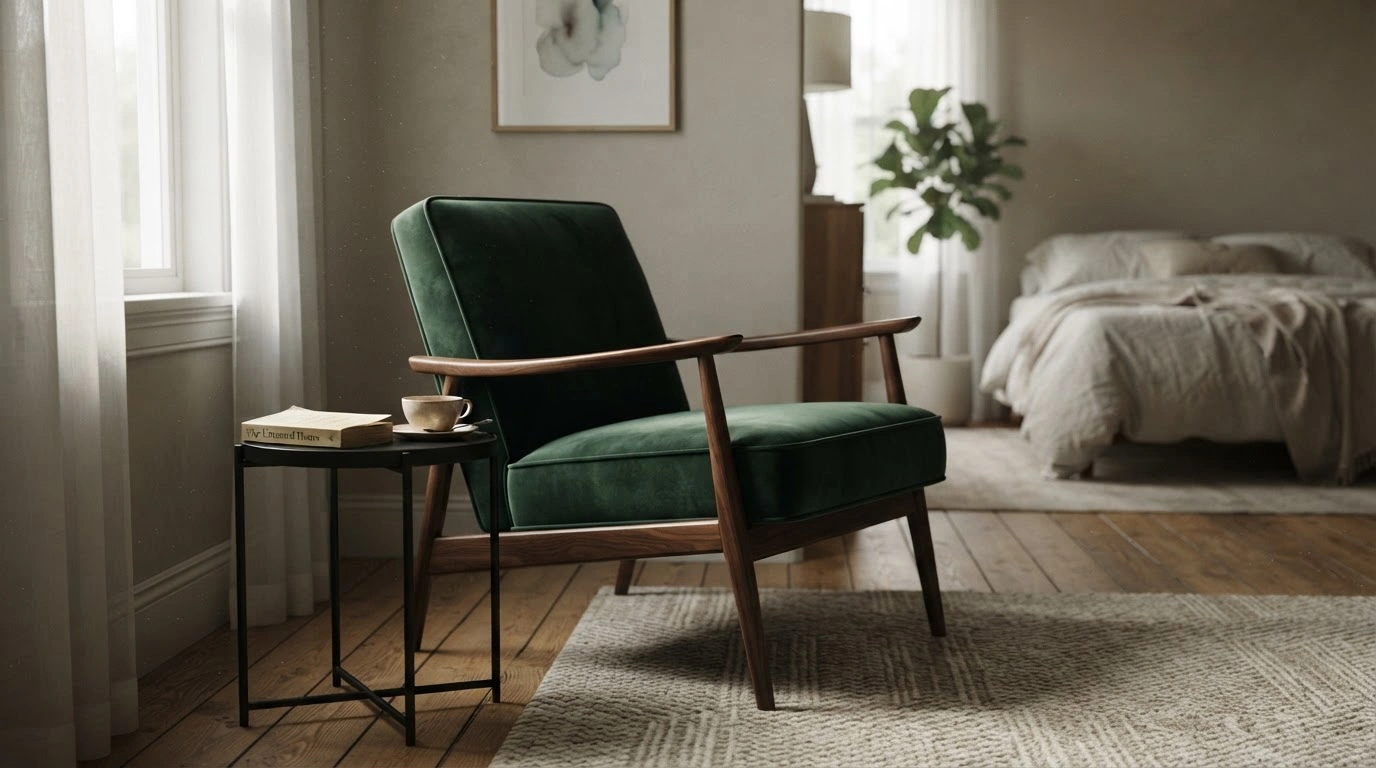
Bedrooms tend to get designed around the obvious things first. The bed takes centre stage, bedside tables follow, storage gets squeezed in wherever it fits, and then everyone stands back and decides the room is more or less done. But some of the nicest bedrooms are the ones that make better use of the awkward or overlooked spaces around the edges.
A quiet corner can become somewhere to read, put on shoes, unwind before bed, or simply sit without feeling like you’re in the middle of the room. That’s where pieces like bedroom lounge chairs can earn their place. They’re not essential in the strictest sense, but they can completely change the way a bedroom feels by giving the space another purpose beyond sleeping.
Not Every Corner Needs Storage
When people see an empty section of a bedroom, the first instinct is often to fill it with something practical. Another set of drawers. A basket. A shelving unit. A coat stand. Storage is useful, obviously, but if every spare metre is dedicated to holding more stuff, the room can start to feel like a very well-organised cupboard.
Sometimes the better move is to leave a little breathing room or create a small area that exists purely for comfort. A chair near a window, a low side table, a lamp, and maybe a small rug can turn an awkward corner into somewhere you actually want to spend time.
That doesn’t mean every bedroom needs a full reading nook. In a smaller room, one comfortable chair can be enough. The point is to think about whether the room could do more than it currently does without becoming crowded.
A Bedroom Should Support the Parts of the Day Around Sleep
Most people use their bedrooms for much more than sleeping. It’s where you get dressed, scroll through your phone, fold laundry, talk on the phone, read, have a cup of tea, or decompress at the end of a long day.
Those in-between moments are often poorly catered for. Without another place to sit, clothes end up on the bed, you perch awkwardly on the edge of the mattress, or everything happens in the same spot.
A small seating area can create a subtle separation between “awake time” and “bed time”. That can be especially useful if you’re trying to make the room feel calmer at night. Reading in a chair instead of under the doona, for example, can help stop the bed from becoming the place where every activity happens.
It also gives the room more balance. A large bed can visually dominate a space, so adding another piece of furniture with a lower profile can make the layout feel more intentional.
The Window Is Often Wasted Space
Windows are one of the best features in a bedroom, but the space around them often goes unused. If there’s enough room, placing a chair nearby can instantly make the area more inviting.
Natural light makes a reading spot feel better during the day, and a window seat can become a pleasant place to have a morning coffee, check emails, or simply sit for five minutes before the day starts. Even if the view is ordinary, having somewhere to sit near natural light can make the bedroom feel less enclosed.
The key is scale. A huge armchair shoved into a narrow corner will make the room feel smaller, while something lighter with open legs or a compact profile can fit without overwhelming the space.
You also want to think about the path through the room. If the chair forces you to sidestep around it every morning, it’s probably in the wrong place no matter how good it looks.
Think Beyond Matching Furniture Sets
Bedrooms can become flat when everything matches too perfectly. The bedhead, bedside tables, drawers, and chair don’t all need to come from the same collection or even the same material.
A lounge chair can be a useful way to introduce contrast. If the room is full of straight lines and hard finishes, something upholstered can soften it. If the space is neutral, a textured fabric or deeper colour can add personality without taking over the room. If the existing furniture is dark and heavy, a lighter chair can stop the room feeling weighed down.
This is also a good place to take a small design risk. Because the chair isn’t the dominant piece in the room, it can carry a slightly bolder fabric, shape, or colour than you might choose for the bed or large storage furniture.
Lighting Can Turn an Unused Corner Into a Destination
Furniture on its own won’t necessarily make a corner useful. Lighting is often what completes the idea.
A floor lamp beside a chair instantly signals that the area has a purpose. A wall-mounted light can work well in tighter rooms where floor space is limited. Even a small lamp on a nearby table can make the corner feel separate from the general overhead lighting.
This matters most in the evening. A softer pool of light creates a calmer atmosphere than turning on the main ceiling light, and it makes the room feel more layered.
Once you start adding different light sources, the bedroom often feels more finished even if nothing else changes.
Give the Room One Place That Isn’t Purely Practical
Bedrooms have plenty of jobs to do, but not every item needs to justify itself through storage or efficiency. A comfortable chair, a small piece of art, a plant, or a simple side table can make the room feel more personal and less transactional.
Those little corners are often what turn a bedroom from a place you sleep into a place you genuinely enjoy being in.
The Overlooked Spaces Can Change the Whole Room
You don’t need to redesign the bedroom from scratch to make it feel better. Sometimes the biggest improvement comes from noticing the space that isn’t doing anything yet.
A forgotten corner, an empty stretch beside the window, or a patch of floor at the end of the bed can become useful with just one or two well-chosen pieces. When those areas are treated with the same attention as the bed itself, the whole room starts to feel more complete.


