

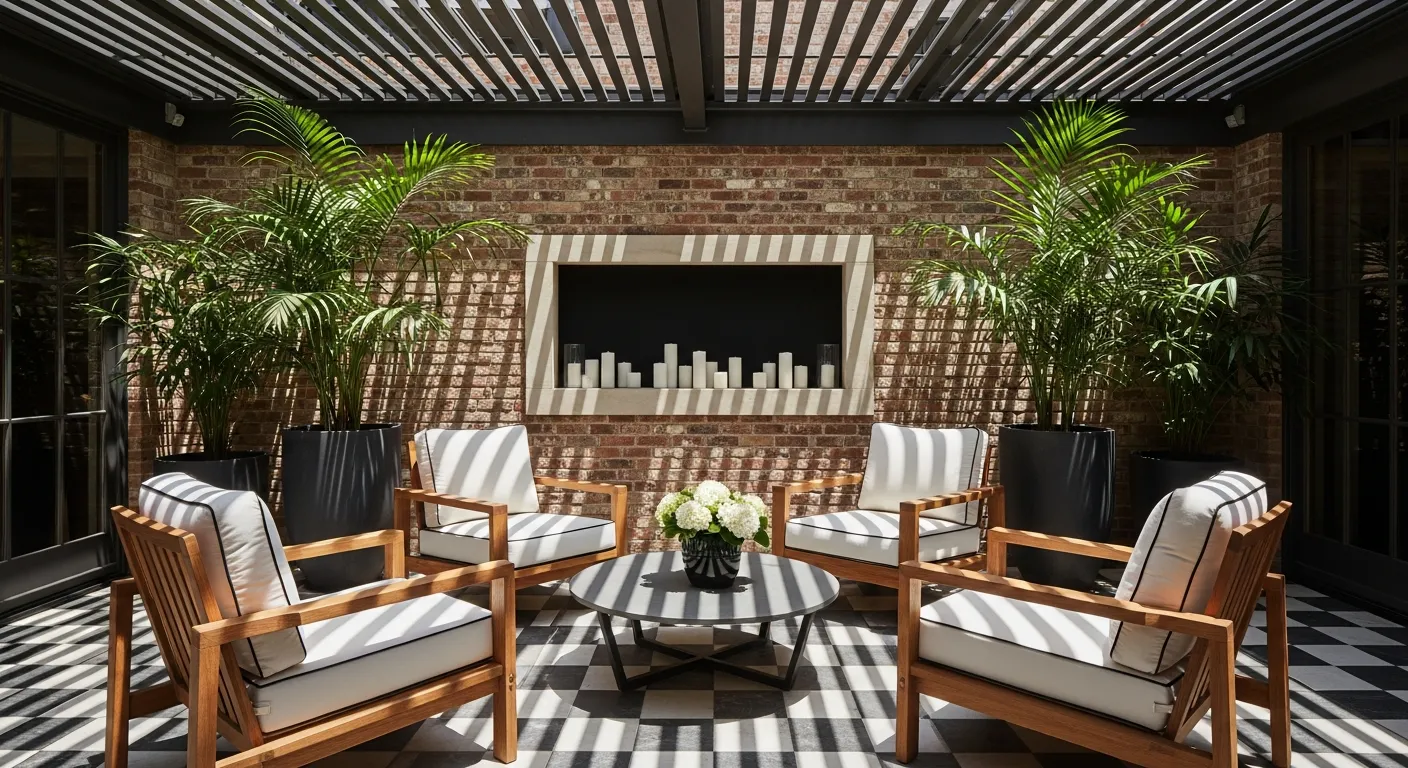
Increasingly, homeowners are looking up and realizing that the ceiling might be the most overlooked opportunity in biophilic design. What if the structure above could serve as the finished surface? Without extra layers or unnecessary materials, the home’s bones become a deliberate design feature, thoughtfully revealed. This is where exposed all-wood ceilings move from design trend to strategic upgrade.
Understanding Biophilic Design and Why Wood Works So Well With It?
Biophilic design centers on reconnecting people with nature in built environments. It taps into an innate human preference for natural elements like materials, light, airflow and organic forms.
Research continues to reinforce its value. Studies show that environments incorporating natural features like wood, daylight and greenery can reduce stress, improve mood and enhance cognitive performance.
Wood stands out because it delivers multiple biophilic cues at once:
- Natural texture and variation
- Warm, earth-toned color palettes
- A sensory connection through sight and touch
Unlike synthetic finishes, wood carries subtle imperfections and grain patterns that mirror nature’s complexity — and that’s exactly what the brain responds to.
The “Bones as Skin” Strategy: A Smarter Way to Design
Traditional construction layers ceilings with drywall, paint and sometimes decorative finishes. An exposed all-wood ceiling flips that logic on its head. Instead of covering structural elements, it celebrates them. This “bones as skin” approach offers two powerful advantages.
Material Efficiency
By skipping secondary finishes, homeowners reduce material use, labor and waste. Fewer layers mean fewer resources consumed, which is a win for both sustainability and budget.
Material Innovation
Dowel-laminated timber uses hardwood dowels instead of nails or adhesives to create stable, fully wood-based panels that function as both structure and finish. This reflects broader industry momentum, as the prefabricated housing market was valued at nearly $50 billion in 2024 and is expected to double over the next decade, signaling demand for more efficient, material-conscious building systems.
Authentic Aesthetic
What is visible directly reflects what supports the home. This structural honesty creates a grounded, architectural feel that aligns with biophilic design principles. Rather than adding nature-inspired décor later, the structure itself becomes the design feature.
Why Ceilings Matter More Than Most Think?
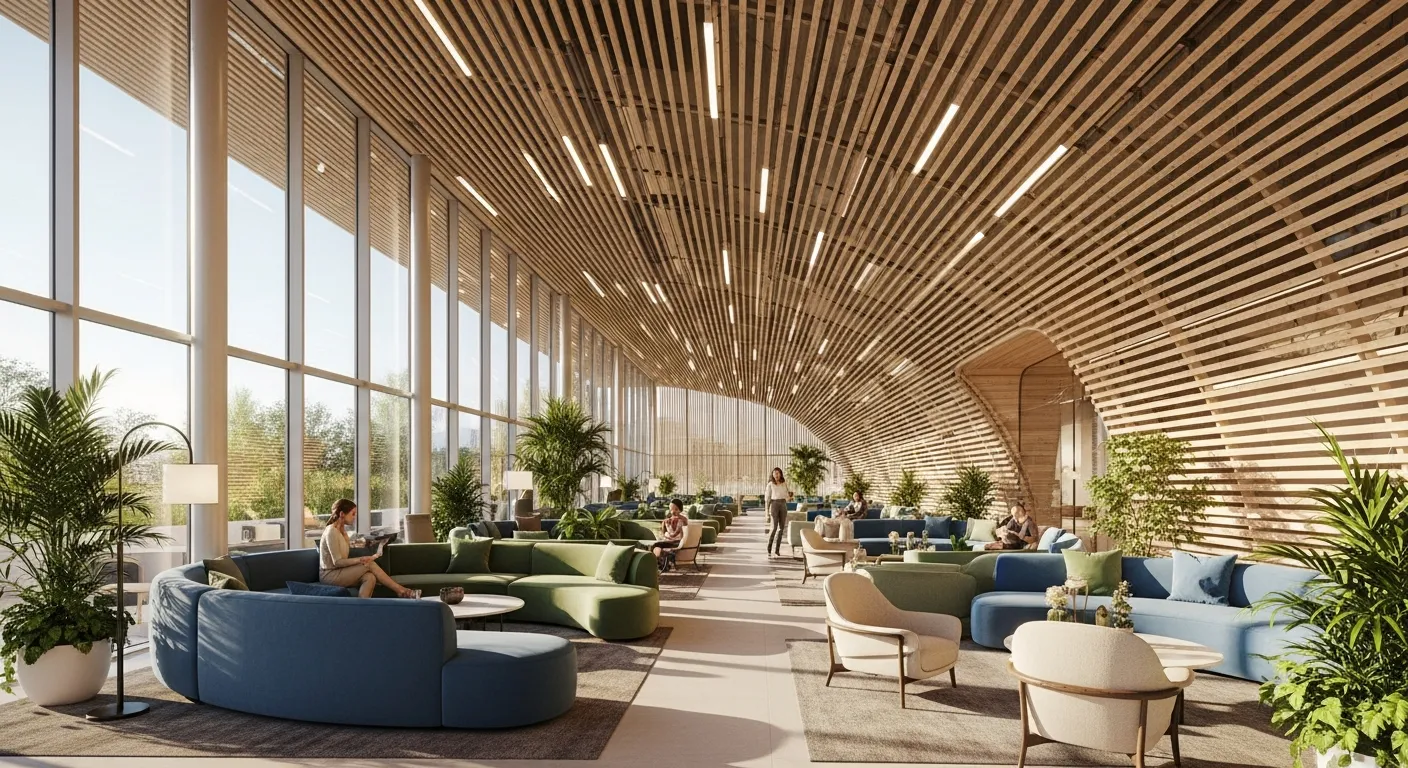
Walls and floors tend to get all the attention. But ceilings occupy a massive portion of visual space, influencing how a room feels more than most people realize.
An exposed wooden ceiling can:
- Expand perceived height through linear grain and beam direction
- Soften acoustics by absorbing sound compared to hard drywall
- Anchor the room with warmth from above
- Introduce natural texture and variation that enhances visual depth
- Strengthen the connection to biophilic design through continuous natural material presence
- Improve spatial cohesion by tying structural elements into the overall interior language
In biophilic design, immersion matters. Surrounding occupants with natural materials strengthens that effect.
The Psychological Edge of Wood Overhead
There’s a subtle but important distinction between adding wood furniture and integrating wood into the architecture itself. Built-in natural elements tend to have a stronger psychological impact. Biophilic environments, especially those incorporating natural materials like wood, are associated with improved emotional well-being and reduced fatigue.
An exposed wood ceiling amplifies this by:
- Keeping natural material within constant view
- Creating a cocoon-like sense of shelter
- Mimicking outdoor environments, like forest canopies or tree cover
It’s less about decoration and more about environmental immersion.
Design Approaches That Actually Work
Not every exposed wood ceiling needs to look like a rustic cabin. The versatility of wood makes it adaptable across styles.
Minimalist and Modern
Light-toned woods like ash or maple with clean lines can pair with neutral walls and hidden lighting for a Scandinavian-inspired look.
Rustic and Textured
Reclaimed beams or darker woods introduce depth and history, perfect for farmhouse or industrial interiors.
Tropical and Airy
In warmer climates, slatted wood ceilings paired with ventilation and natural light create a breezy, resort-like feel.
Hybrid Designs
Exposed beams with wood panels or integrated wood sections into a larger ceiling system establish a balanced approach.
Practical Considerations Before Committing
An exposed all-wood ceiling delivers impact, but it works best with thoughtful planning.
Moisture and Climate
Wood responds to humidity. Proper sealing and ventilation are essential, especially in tropical or coastal environments.
Fire Safety
Homeowners must check local building codes. Fire-rated treatments or engineered wood products may be required.
Maintenance
Dusting and occasional refinishing come with the territory. Choosing the right finish can reduce upkeep.
Lighting Integration
Recessed fixtures, track lighting or pendant lights can complement the wood rather than compete with it.
Is It Cost-Effective or Just Stylish?
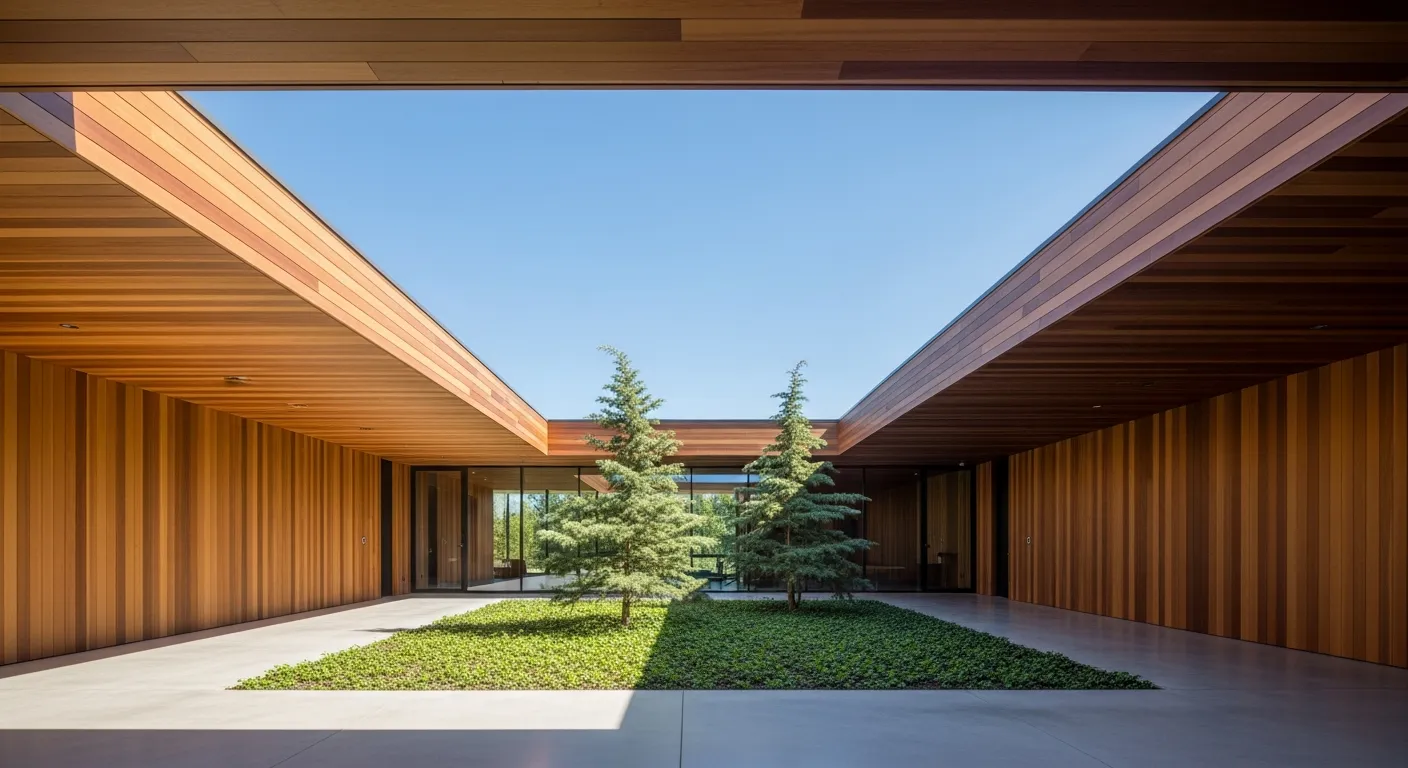
At first glance, wood ceilings may seem like a premium upgrade. However, the equation shifts when eliminating additional finishing materials.
Savings can come from reduced drywall and paint costs, lower labor for finishing layers and fewer materials overall.
At the same time, wood adds long-term value through durability and aesthetic appeal. In many cases, it’s about spending differently, not more.
When an Exposed Wood Ceiling Makes the Most Sense?
This approach shines in:
- New builds where the structure can be designed with exposure in mind
- Renovations that reveal existing beams or timber framing
- Homes aiming for sustainability and material efficiency
- Spaces where warmth and calm are design priorities
It may feel less suitable in highly compartmentalized layouts or rooms with low ceiling height, where visual weight could feel overwhelming.
A Design Move That Works Harder
By turning the “bones” of a house into its final “skin,” homeowners unlock a rare combination — fewer materials, stronger visual impact and a deeper connection to nature. For those exploring wooden ceiling design through a biophilic lens, the ceiling stops being an afterthought and becomes a defining feature. In a world where interiors often lean synthetic, that shift feels refreshingly grounded.


